
Antisemitic narratives in the art and culture sector are no exception: whether in Kassel at documenta fifteen, at the conference “Hijacking Memory” in Berlin or at Roger Waters’s concerts, visible hostility towards Jews in art and culture is increasing.
It is often difficult to impossible to take legal action against this kind of spreading of hatred, because on many legal interpretations the constitutionally high good of artistic freedom also includes the freedom to fill art with antisemitic content. At the same time, a significant part of antisemitic art is funded by state institutions with public money.
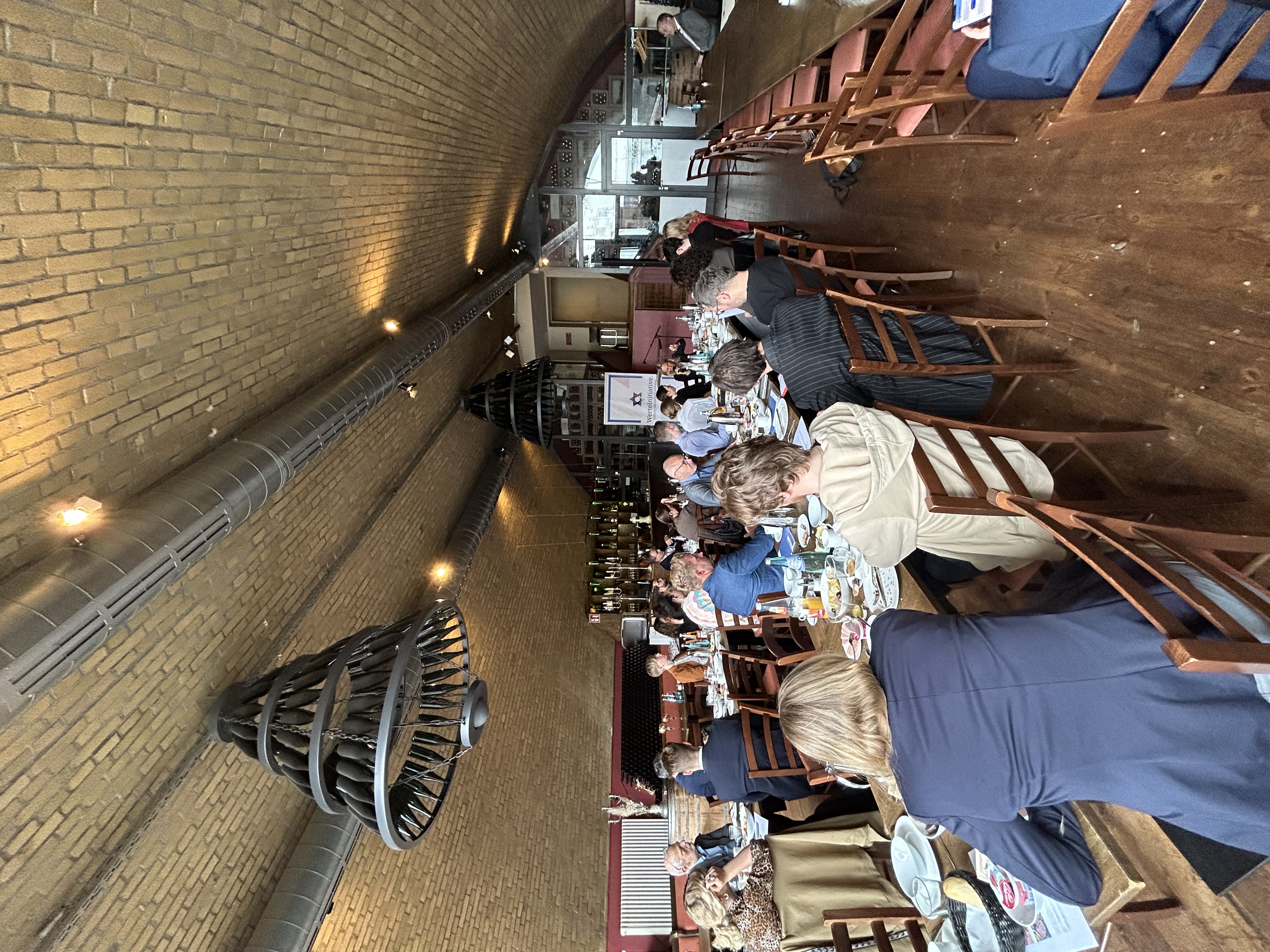
In our Fach-WI-ssen on the topic “Is this antisemitism or can it be funded?” we discussed with Prof. Dr. Elisa Marie Hoven and Stella Leder the extent to which it is legitimate for taxpayers’ money to finance antisemitic agitation, how hatred of Jews in art and culture can be tackled and which legal and structural changes are necessary in order to prevent antisemitism in art and culture in future.
Ms Hoven is Professor of German and foreign criminal law, criminal procedure law, and business and media criminal law at the University of Leipzig.
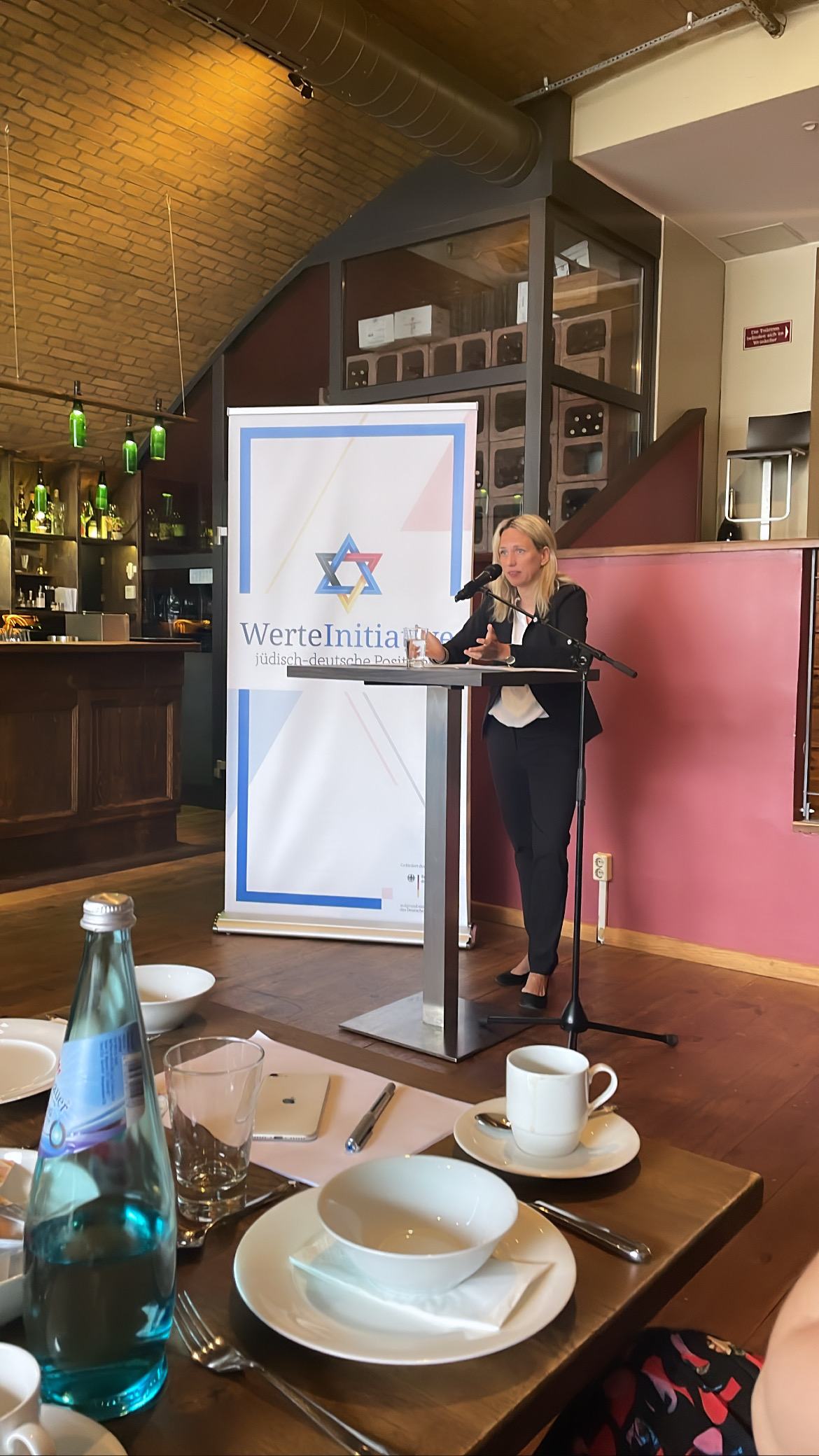
In her talk, Prof. Hoven spoke about the limits of artistic freedom from a criminal law perspective.Stella Leder is an author, dramaturge and head of the Institut für Neue Soziale Plastik.
If art regularly crosses boundaries in the direction of protest, activism, politics or propaganda, right up to the glorification of terror, must clearer limits not then be drawn – in funding guidelines or grant notices?”
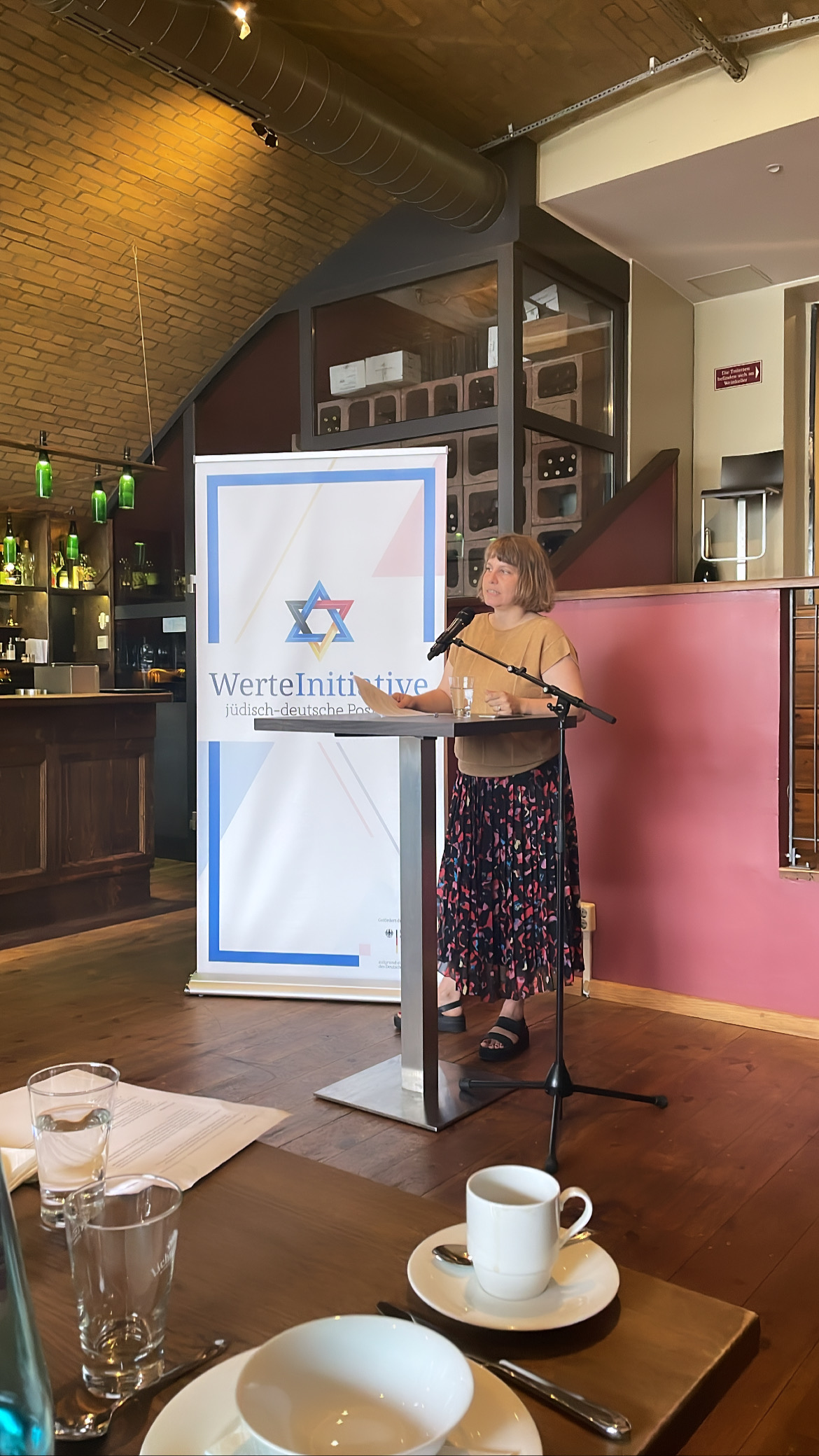
In her talk, Ms Leder emphasised the structural level of antisemitism in large parts of the German art and culture sector and named a multitude of examples of it. She argued that politics must take up this problem.
In a question round, Stella Leder and Prof. Elisa Hoven addressed the audience’s questions with their comprehensive expertise.Following the large early-morning discussion round, there was a meeting with the cultural policy spokesman of Bündnis 90/Die Grünen in the Bundestag, Erhard Grundl, MdB.
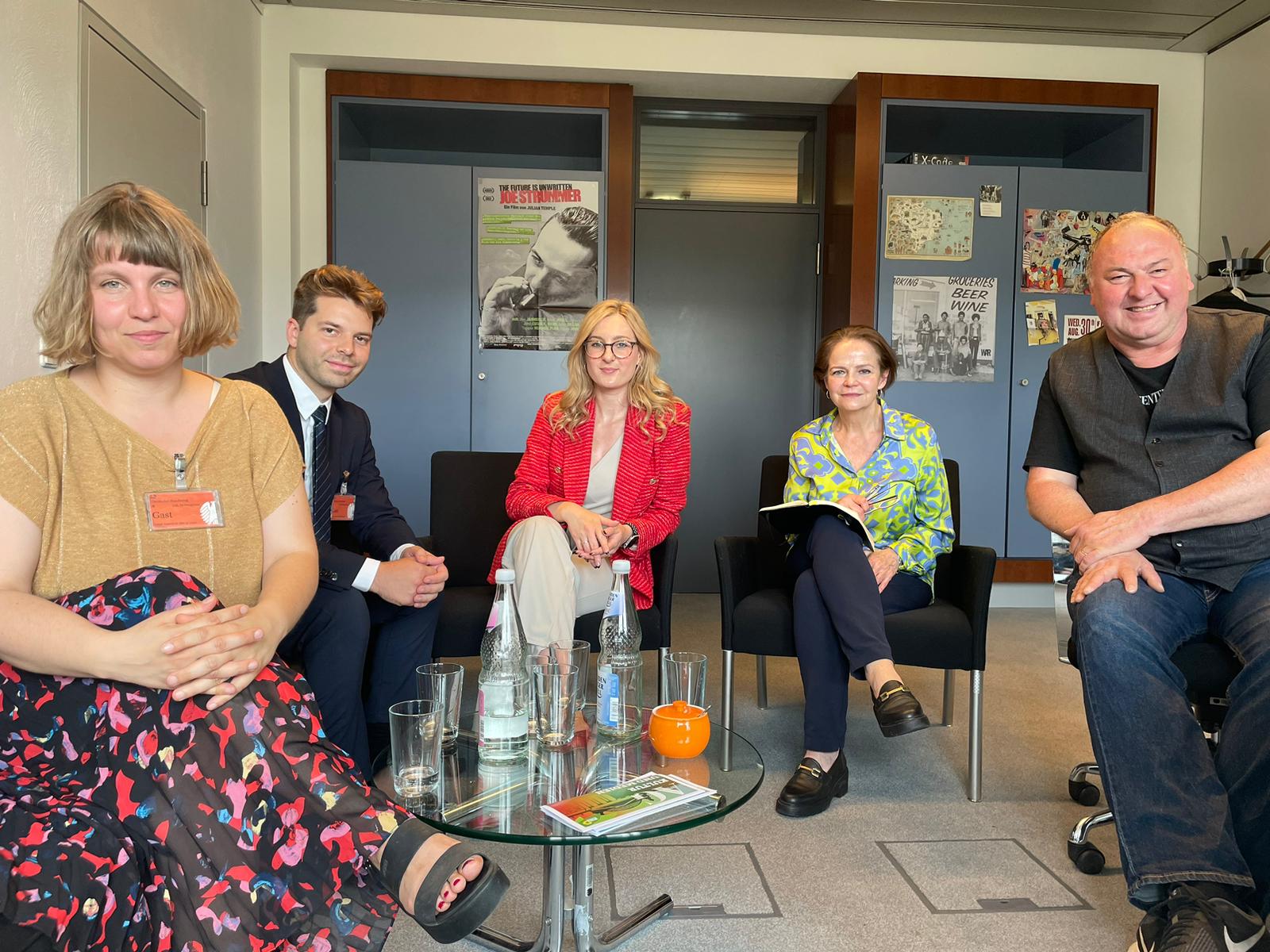
Stella Leder and our spokeswoman Anna Staroselski, as well as our board officer Christof Steidl, spoke with Mr Grundl and his staff member about the framework conditions for a cultural policy critical of antisemitism and about the promotion of pluralism in the art and culture sector.
We are staying on this important topic, remain in exchange with politicians and will shortly publish our position paper on it.