One of the greatest challenges of the digital age is the speed at which false information and the conspiracy narratives that accompany it spread. Fake news and disinformation campaigns have dominated the internet and the media since well before the beginning of the coronavirus pandemic. A global phenomenon that has long since arrived in Germany. A fixed component of it are controlled disinformation campaigns, such as those run by the German offshoot of the Russian state broadcaster Russia Today ahead of the most recent Bundestag election.
As communication becomes increasingly digitalised, vulnerability grows. Disinformation nowadays comes dressed up as current news. In the flood of information it can hardly be distinguished from serious reporting.
Added to this is the spread of alternative media platforms such as Telegram, on which antisemitism is deliberately stoked.
The internet acts as a catalyst for conspiracy myths and false information. What is their cause? Are they targeted campaigns and, if so, how organised are they? Who or what is the target of disinformation and what can politics and civil society set against it?
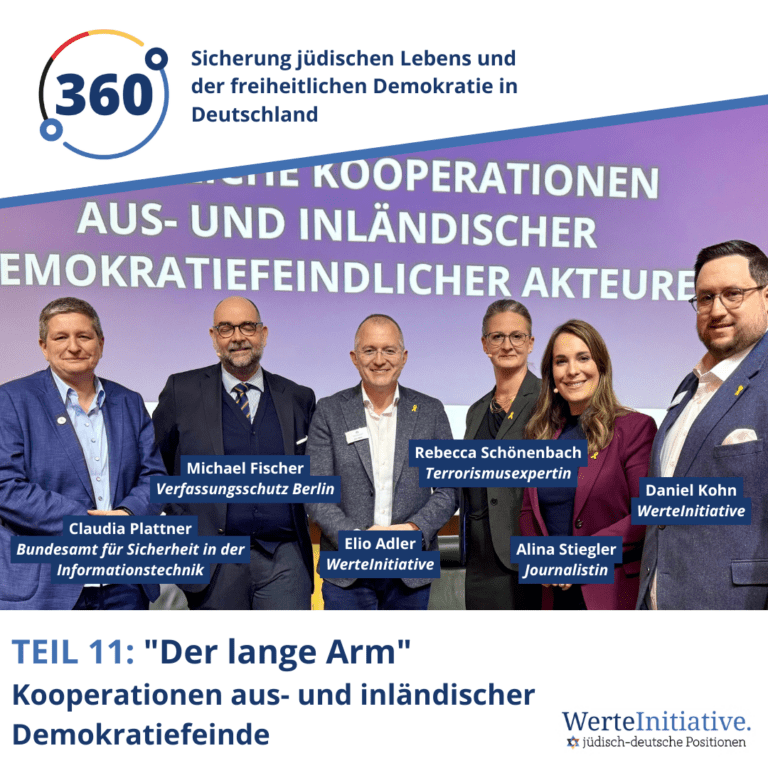
The WerteInitiative discusses these questions with its guests in cooperation with the think and do tank „Institute for Strategic Dialogue“ (ISD Germany).On the panel:
• Rita Schwarzelühr-Sutter (Parliamentary State Secretary, Ministry of the Interior, SPD)
• Benjamin Strasser (Parliamentary State Secretary, Ministry of Justice, FDP)
• Pia Lamberty (Center for Monitoring, Analysis, and Strategy / CeMAS)
• Julia Smirnova (Institute for Strategic Dialogue / ISD Germany)
Moderation: Karolin Schwarz (author: Hasskrieger. Der neue globale Rechtsextremismus)